Protective Styles for Healthy Hair
Protective hairstyles can promote scalp health and hair follicle preservation in Black women.

KEY TAKEAWAYS
- Protective hairstyles such as braids, cornrows, weaves, wigs, and locs can reduce daily manipulation and mechanical stress, potentially limiting breakage and helping preserve hair shaft integrity.
- The benefits of protective styling depend heavily on technique and duration, as styles that are too tight or worn for extended periods—particularly beyond 3 months—can contribute to traction alopecia, seborrheic dermatitis, and scalp irritation.
- Pain, redness, or flaking during or after installation should not be considered normal and may signal excessive tension or scalp injury that warrants adjustment and, when appropriate, dermatologic evaluation.
- Dermatologists should balance the clinical benefits and risks of protective hairstyles with their deep cultural significance, providing culturally responsive guidance that supports scalp and follicle health while respecting patient preferences.
Finding the Right Balance
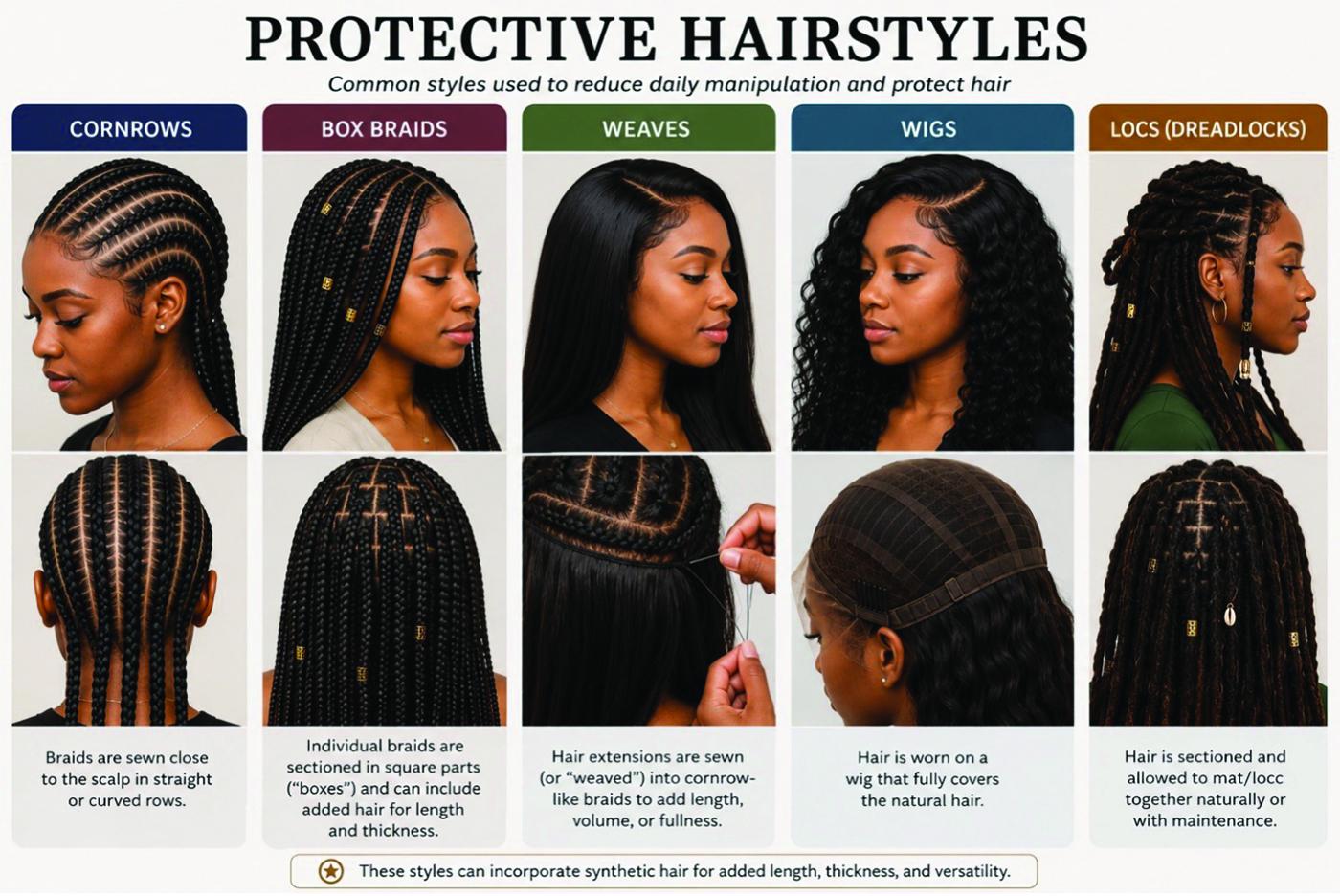
From tribal identification in precolonial African societies to hidden roadmaps used by enslaved African Americans seeking freedom, protective hairstyling has held profound cultural significance for women across African diasporic communities.1 More recently, these hairstyles have been popularized in response to discriminatory workplace policies against natural hair in Black women. For others, protective styling may serve as a symbol of cultural pride.2 Protective hairstyles include cornrows, box braids, weaves, wigs, and locs (commonly known as dreadlocks). Cornrows, box braids, and locs can include the addition of synthetic hair for increased thickness and length; weaves involve the sewing of hair into cornrow-like braids. The cultural and political histories tied to each hairstyle contribute to the complex relationship between Black women and their hair.
BENEFITS
Protective styling (Figure) offers a low-manipulation approach to hair maintenance that may be particularly beneficial in Black women with active or demanding lifestyles.1,3 Because most of these hairstyles are worn for weeks to months at a time, the reduced need for frequent combing or brushing may limit the daily mechanical stress put on hair strands.4 By minimizing routine hair manipulation, individuals may experience reduced hair breakage and improved hair shaft integrity. There is a common cultural belief that these styles can optimize moisture retention within the hair, but research on these direct benefits remains limited and requires further exploration. Protective hairstyles also offer a versatile avenue for self-expression in Black women, while minimizing daily styling time, potentially contributing to the cultural and societal popularity of these styles.
ASSOCIATIVE RISKS
Black women remain the largest demographic affected by traction alopecia, due to increased frequency of high-tension hairstyles, with tighter curl patterns demonstrating higher mechanical fragility than looser hair patterns.4 Furthermore, frequent braiding and combing is positively correlated with increased hair damage and higher instances of traction alopecia in Black women.5 The benefit of protective hairstyling may be lost if the style is too tight or worn for extensive periods (>3 months), putting the individual at risk for seborrheic dermatitis and traction alopecia.4-6 Beyond the potential risks of scalp irritation and subsequent alopecia, recent studies have discovered carcinogenic substances in brands of synthetic hair commonly used for box braids and cornrows.7 Individuals should be aware that these styles should not cause redness, flaking, or pain. If these sensations are felt at any point of style installment or afterward, they should not be ignored, and dermatologic guidance is recommended.
CONCLUSION
Protective styling remains a culturally significant and widely practiced hair care method for Black women, offering reduced mechanical manipulation and potential preservation of hair shaft integrity. However, prolonged use of high-tension hairstyles may increase the risk of traction alopecia and other scalp disorders, warranting careful guidance. As awareness of protective hairstyling practices continues to grow within dermatology, clinicians should be familiar with both their cultural significance and associated risks to provide culturally responsive recommendations that support scalp health while respecting patient preferences.
Ready to Claim Your Credits?
You have attempts to pass this post-test. Take your time and review carefully before submitting.
Good luck!