
Redefining Acne Scar Treatment with a Multimodal Approach for Diverse Skin Types

Acne is a nearly universal experience,1 but for some, it leaves behind scarring that goes far deeper than the skin’s surface. These scars have the power to greatly affect one’s quality of life and mold one’s self-image.2,3 Single-modality techniques are often the foundation of traditional treatments; however, they are often inadequate, particularly for individuals with more complex or severe scarring.4 When done deliberately, mixing various modalities can yield not only additive but also cumulative and better results. Having practiced dermatology for more than 25 years and operated with 32 advanced lasers and devices, I have created a personalized treatment plan that combines different layers for acne scar revision.
First, I treat the active acne before concentrating on any remaining scarring because acne can have bacterial, hormonal, genetic, or environmental causes.
The next step is treating the scars, and my approach, which I call the “Quadrafecta,” is differentiated through its systematic and integrative use of four modalities in one visit: laser resurfacing, dermal filler injection (eg, poly-L-lactic acid or a collagen/polymethylmethacrylate mix), and either a punch excision or radiofrequency microneedling treatment. The specific protocols are tailored to each patient’s skin type, scar shape, and lifestyle, as well as which of the four primary types of acne scars—ice-pick, rolling, boxcar, and trophic5—is being treated. My preferred approach for treating ice-pick scarring is punch excision, but for anything involving looseness of the skin, radiofrequency microneedling is a better option, and many patients have a combination of different types of scars, so different treatments may be required in different areas. For the laser resurfacing, meanwhile, CO2 or Er:YAG lasers are my preferred modality for patients who can handle a few days of recuperation, but no-downtime lasers such as Nd:YAG and diode are also an option.
The “Quadrafecta” approach hinges on the concept that the sum is greater than the whole of its parts. The method employs four synergistic treatments instead of one aggressive modality to rebuild collagen while releasing tethered scars and restoring volume and resurfacing the skin. The treatments work together when properly adjusted to produce enhanced results that create natural-looking healing at a deeper level.
CASE REPORT 1
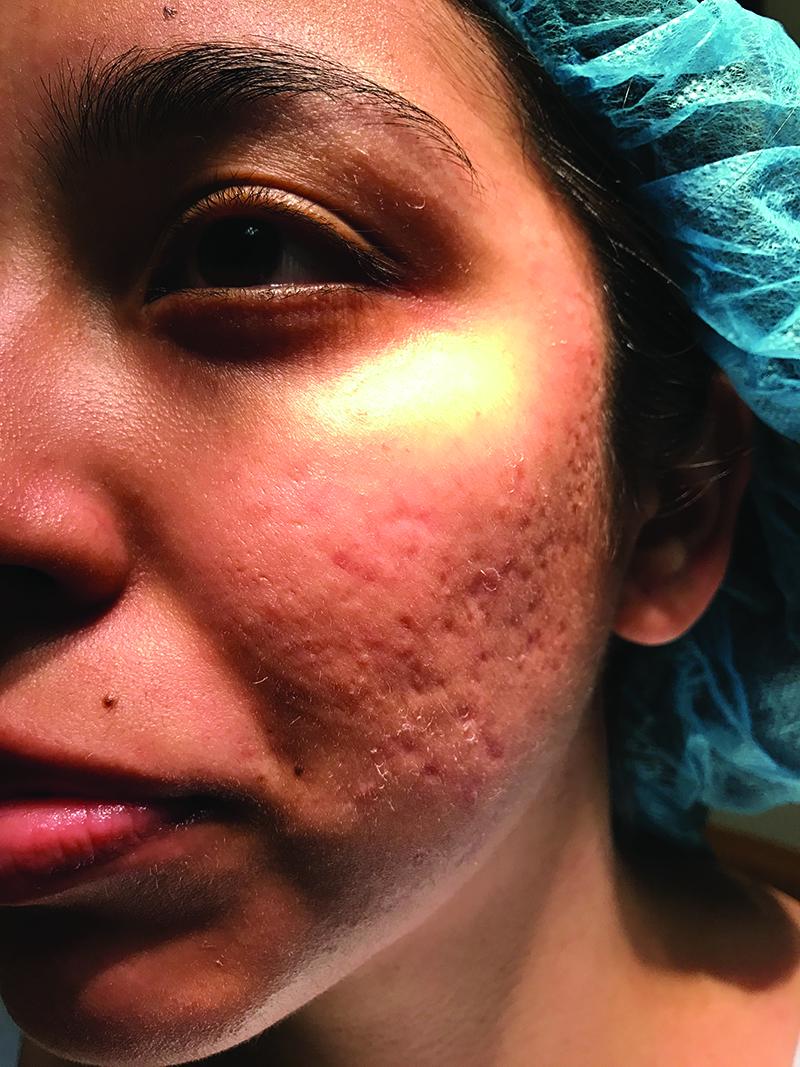
A 23-year-old female presented with rolling and boxcar scars (Figure 1). She was treated in one visit with aggressive fractional CO2 laser resurfacing (MiXto Pro, Lasering USA), subcision of tethered scars, poly-L-lactic acid filler (Sculptra, Galderma), and microneedling with radiofrequency (Venus Viva MD, Venus Concept).
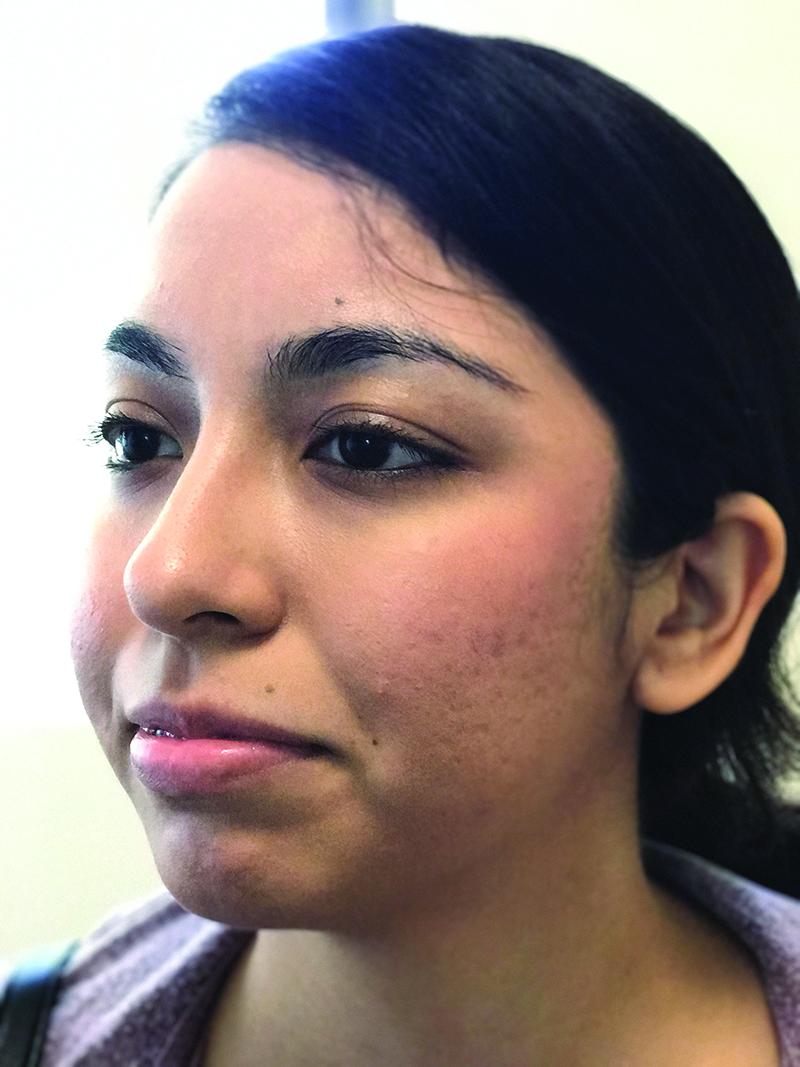
The order of the treatment was important. First, the area was treated with the laser resurfacing. This was followed by subcision and fillers, and then the last step was microneedling and radiofrequency of the surrounding skin to tighten everything (Figure 2).
CASE REPORT 2
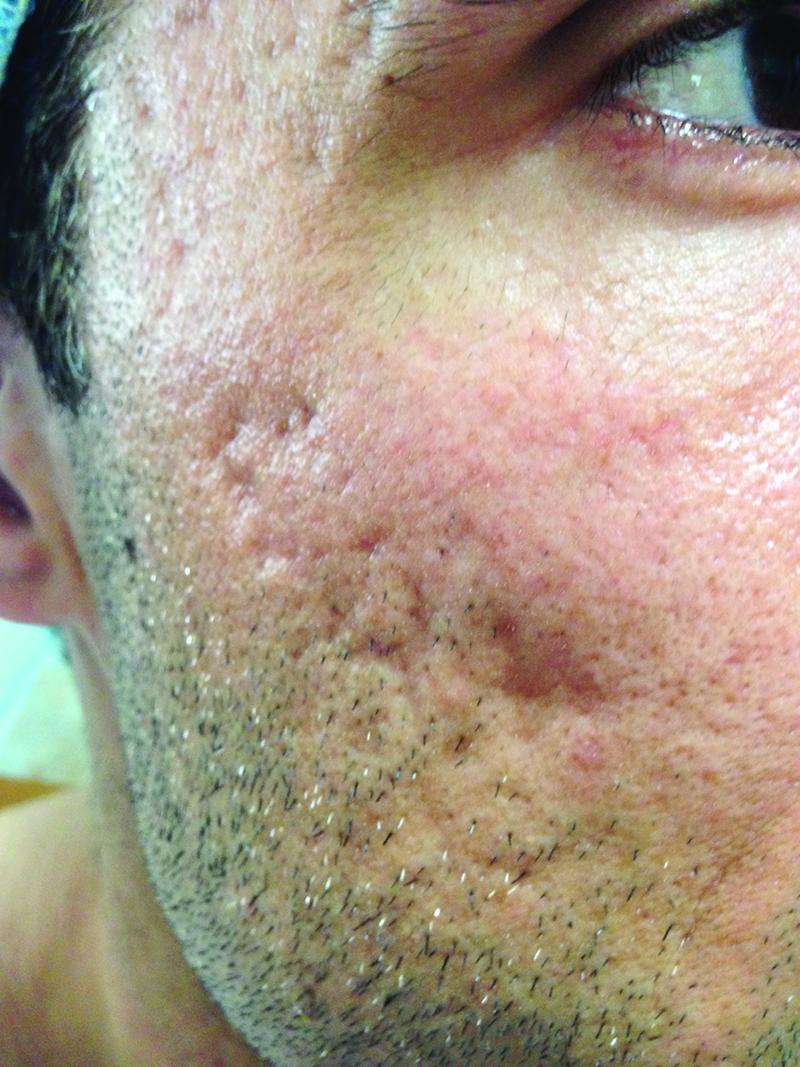
A male patient in his 30s presented with deep atrophic and rolling acne scars (Figure 3). He was treated in one visit with CO2 laser resurfacing (MiXto Pro, Lasering USA), subcision, a collagen/polymethylmethacrylate filler (Bellafill, Tiger Aesthetics), and ultrasound tightening of the cheek skin (Ultherapy, Merz Aesthetics).
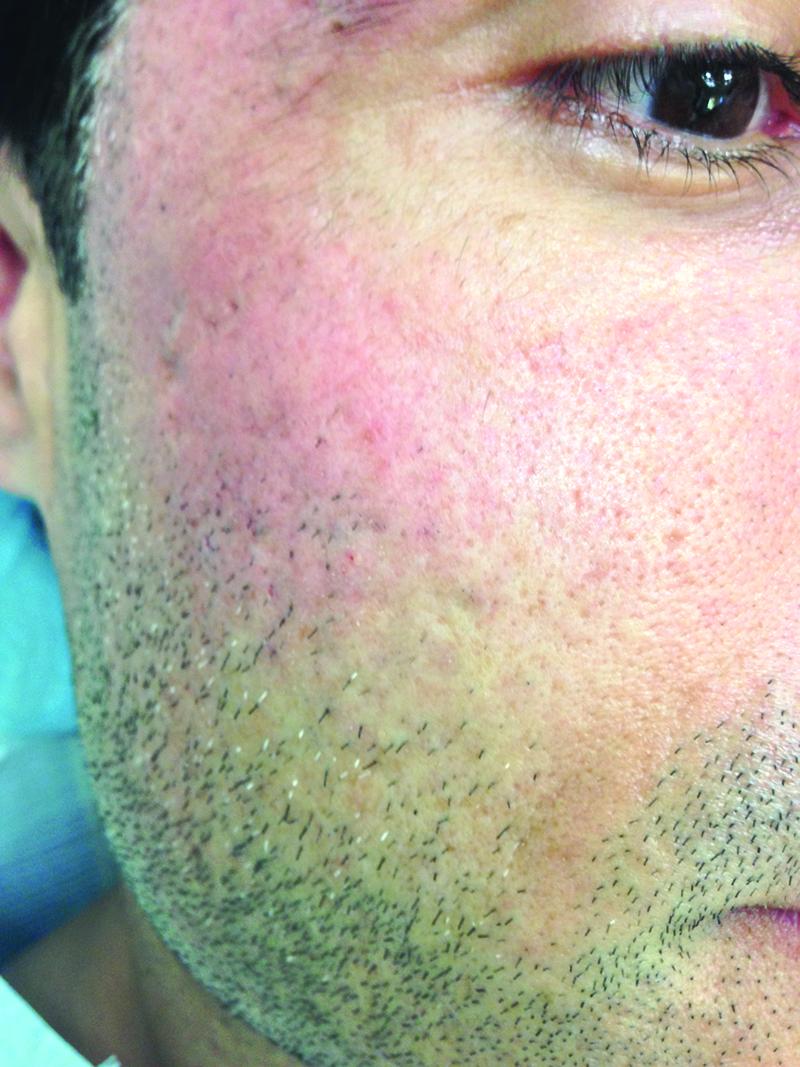
Again, the order of treatment was imperative. The skin was first treated with laser resurfacing, followed by subcision and dermal filler, and the last step was tightening of the surrounding skin with ultrasound (Figure 4).
DISCUSSION
When these treatments are combined, better outcomes are achieved while safety regulations are upheld because a lesser level of skin trauma is achievable when the therapy intensity is distributed among several techniques instead of using one modality excessively.
A common misconception is that patients with darker skin tones, such as those with Hispanic, Black, or South Asian backgrounds, are poor candidates for laser resurfacing or aggressive acne scar treatment. However, darker skin can undergo extensive resurfacing procedures as well.6-9 From my experience, the success of resurfacing darker skin depends on correct skin preparation that includes bleaching cream and tretinoin treatment before the procedure to reduce inflammation and minimize post-inflammatory hyperpigmentation. Additionally, multiple treatments can be safely combined in a single session when experienced dermatologic surgeons who understand skin anatomy and healing thresholds perform these procedures.
Acne and scarring do not define one’s life. A customized treatment plan that combines multiple techniques with experienced precision allows dermatologists to safely treat even the most challenging scars. Patients now have access to treatments that balance safety with results, particularly when they have darker skin tones. Through combination therapy, attention to detail, and the understanding that every scar and skin type is different, dermatologists can restore not only the skin but also confidence and quality of life.
Disclosures: The authors report no financial conflicts of interest.
“
While GA is benign, the condition is taxing on patients psychosocially. The current literature lacks robust and systemic studies of GA, limiting treatment and management.
”
Fig 4. The patient’s scarring is mostly resolved following treatment with with CO2 laser resurfacing, subcision, fillers, and radiofrequency microneedling.
Fig 3. A male patient in his 30s presents with deep atrophic and rolling acne scars.
Fig 2. The patient’s scarring is mostly resolved following treatment with with CO2 laser resurfacing, subcision, fillers, and radiofrequency microneedling.
Fig 1. A 23-year-old female patient presents with rolling and boxcar scars.
Ready to Claim Your Credits?
You have attempts to pass this post-test. Take your time and review carefully before submitting.
Good luck!