
BE BOLD: Bimekizumab Maintains Higher ACR50 Responses vs Risankizumab at Week 24
Key Takeaways
Bimekizumab demonstrated statistically superior ACR50 responses compared with risankizumab at Week 16 in the Phase 3b BE BOLD trial, with numerically higher response rates maintained through Week 24.
At Week 24, 54.9% of bimekizumab-treated patients achieved ACR50 compared with 43.8% receiving risankizumab. Complete skin clearance rates were comparable between groups.
Overall treatment-emergent adverse event rates were similar; Candida infections occurred more frequently with bimekizumab.
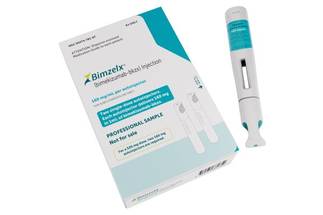
New Phase 3b BE BOLD trial results showed that bimekizumab-bkzx (Bimzelx; UCB) maintained numerically higher joint response rates than risankizumab-rzaa (Skyrizi; AbbVie) through 24 weeks in adults with active psoriatic arthritis (PsA), following statistically significant superiority at Week 16.
The findings were announced by UCB on November 9 and are being presented at ACR Convergence 2026 in Orlando, Florida.
The multicenter, randomized, double-blind trial included 553 adults with active PsA who were biologic-naive or previously treated with one tumor necrosis factor inhibitor. Participants received bimekizumab, which selectively inhibits interleukin (IL)-17A and IL-17F, or risankizumab, an IL-23 inhibitor.
BE BOLD Week 24 Joint, Skin, and Safety Outcomes
At Week 16, the primary endpoint of ACR50 response was achieved by 49.1% of bimekizumab-treated patients versus 38.0% receiving risankizumab (P = 0.0058). By Week 24, response rates increased to 54.9% and 43.8%, respectively, although this later comparison was exploratory.
Minimal disease activity and other secondary endpoints numerically favored bimekizumab without demonstrating statistical significance.
Among patients with baseline psoriasis affecting at least 3% of body surface area, complete skin clearance (PASI100) occurred in 59.7% receiving bimekizumab and 59.1% receiving risankizumab at Week 24.
Treatment-emergent adverse events occurred in 58.1% and 55.3% of patients, respectively. Candida infections were more frequent with bimekizumab (2.9% vs 0.7%). The trial was not powered for comparative safety assessments.
Source
McInnes I, et al. Presented at: ACR Convergence 2026; November 6-11, 2026; Orlando, FL. Abstract 2456479. Data supplied in UCB press release, November 9, 2026.