
Study Shows Racial Differences in Pseudofolliculitis Barbae Complications, Treatment Timing
Key Takeaways
- Black patients with pseudofolliculitis barbae (PFB) saw higher rates of post-inflammatory hyperpigmentation (PIH) and hypertrophic scarring than White patients in a large TriNetX analysis.
- The data suggested racial differences in the timing and selection of topical therapies, with Black patients receiving topical corticosteroids and retinoids earlier but topical clindamycin later than White patients.
- About half of patients with PFB had no documented pharmacologic treatmen.
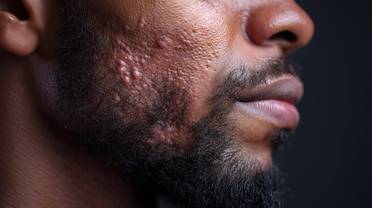
A multicenter retrospective cohort study published as a Letter to the Editor in the Journal of Drugs in Dermatology found that Black patients with pseudofolliculitis barbae (PFB) experienced significantly higher rates of post-inflammatory hyperpigmentation (PIH) and hypertrophic scarring than White patients.
Investigators searched the TriNetX Research Network (more than 131 million patients) and identified 6,988 adults with at least two ICD-10 diagnoses of PFB documented at least one month apart. Patients were propensity score-matched for age, sex, and gender (2,045 Black/African American patients were matched with 2,045 White patients).
According to the data, Black patients had nearly a fourfold greater risk of PIH than White patients (6.18% vs 1.56%; relative risk = 3.98) and more than double the risk of hypertrophic scarring (2.38% vs. 1.00%; RR = 2.38). All reported comparisons were statistically significant (P < 0.05).
Racial differences in topical prescribing patterns were also revelaed in the data. Black patients initiated topical corticosteroids sooner than White patients (281 vs. 352 days) and received topical retinoids earlier (106 vs. 207 days), while White patients were more likely to receive corticosteroids and topical clindamycin as first-line therapy. Black patients saw a longer time to topical clindamycin initiation (139 vs. 111 days). Benzoyl peroxide use was similar between groups, and topical erythromycin was rarely prescribed. About 46% of patients had no documented pharmacologic intervention for PFB.
The authors suggest these findings may reflect differences in disease severity, barriers to dermatologic care, delayed diagnosis, or the absence of standardized treatment strategies. They conclude that prospective randomized studies and expert consensus efforts are needed to help reduce preventable sequelae and improve equitable care for patients with PFB.
Source
Alomary SA, et al. Journal of Drugs in Dermatology. 2026;25(7):9835.