
Malassezia Sensitization in Head and Neck Atopic Dermatitis: A Meta-Analysis of Prevalence and Diagnostic Markers
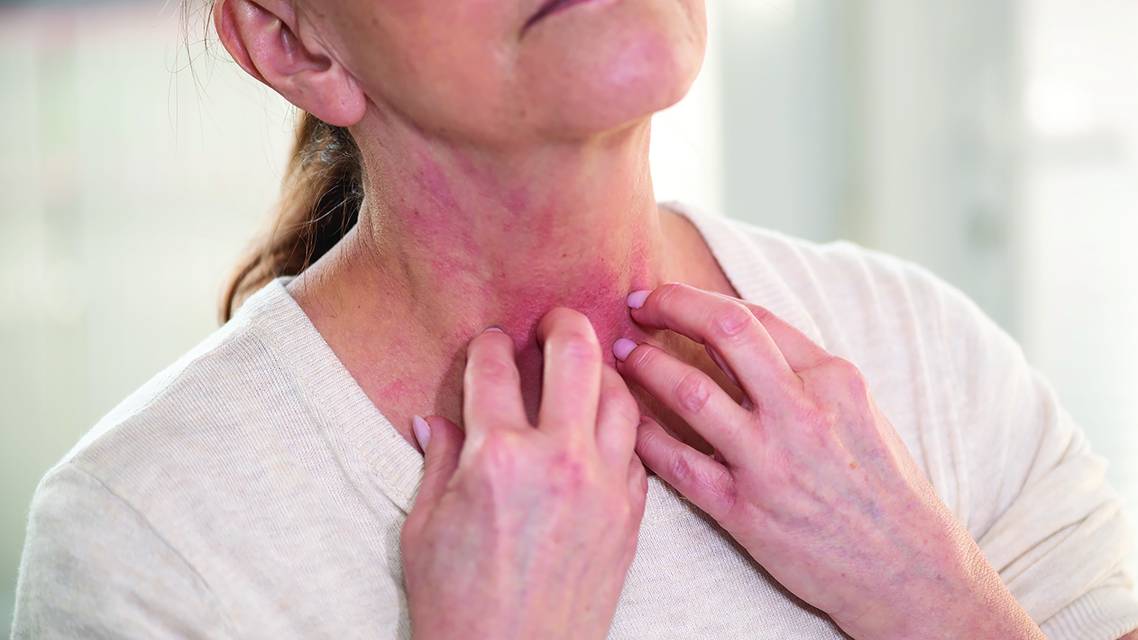
In the 2024 study by See Tow and Yew entitled, “Malassezia specific IgE in head and neck dermatitis of eczema: A systematic review & meta-analysis,” the authors found no statistically significant differences in prevalence of dominant Malassezia species but concluded that Malassezia-specific IgE appears to be common in head and neck atopic dermatitis (HNAD) and may contribute to its pathogenesis.1
BACKGROUND AND STUDY RESULTS
Atopic dermatitis (AD) frequently involves multiple body sites, but a subset of patients exhibits more localization of eczematous lesions on the head and neck area known as HNAD. This subtype of AD is often difficult to treat with standard therapies and may represent a distinct immunologic phenotype.1Malassezia spp., a lipophilic yeast that colonizes human skin, have been hypothesized to exacerbate AD in seborrheic regions via IgE-mediated hypersensitivity or other immune pathways. Prior smaller studies have shown associations between Malassezia-specific IgE and HNAD.2
Given the marked heterogeneity among individual studies in both reported prevalence and methodological approaches, a systematic review and meta-analysis was performed to provide a more reliable estimate of the prevalence of Malassezia-specific IgE among patients with HNAD and to explore potential geographic and methodological sources of variation.3 This systematic review and meta-analysis evaluated the prevalence and clinical significance of Malassezia-specific IgE sensitization among patients with HNAD. The study adhered to PRISMA (Preferred Reporting Items for Systematic reviews and Meta-Analyses) 2020 guidelines, and study quality was evaluated using the Newcastle–Ottawa Quality Assessment Scale (NOS) with a NOS score of ≥7 representing "high-quality" studies.
A systematic search of multiple databases identified observational studies (cross-sectional, case-control, or cohort studies) involving patients with HNAD in which Malassezia-specific IgE levels were measured. Pooled prevalence estimates were calculated using a random-effects meta-analytic model, which adjusts for variations among the included studies. Subgroup analyses were conducted according to geographical region, study quality, and predominant Malassezia species. Heterogeneity and between-group variation were further assessed using appropriate statistical tests, including p-values for subgroup comparisons. Fourteen observational studies (published from 1991 to 2022) met the inclusion criteria, encompassing 840 patients, 58% of whom were male.
The pooled prevalence of Malassezia-specific IgE among HNAD patients was 79.3% (95% CI). The prevalence varied across geographic regions (P = 0.0441) and was higher in non-Asian regions (88%) compared to Asian regions (54.73%). The prevalence varied by study quality (P = 0.0386) and was higher in studies with higher NOS scores (95.4%) compared to those with lower NOS scores (58.1%). No significant difference in Malassezia-specific IgE prevalence was observed between more and less predominant Malassezia species (P = 0.1048). Lastly, Malassezia species appear to play a key role in the pathogenesis of HNAD, with IgE antibodies against Malassezia serving as a common immunologic marker of HNAD.
CLINICAL IMPLICATIONS
This systematic review and meta-analysis sheds light on the potential pathophysiology of HNAD and is one of the first meta-analyses establishing a relationship between Malassezia-specific IgE and HNAD. The pooled prevalence of Malassezia-specific IgE among HNAD patients being 79.3% highlights that sensitization to Malassezia spp., measured by Malassezia-specific IgE, may well be a trigger or pathogenic factor of HNAD. The significant association of sensitization indicates that testing for Malassezia-specific IgE could be clinically beneficial for diagnosing and classifying the phenotype of patients with HNAD. Importantly, the prevalence of sensitization was found to be greater in non-Asian cohorts compared to Asian ones and significantly higher in studies of better quality, indicating that both methodological and geographic and/or ethnic factors impact the rates observed.
Although previous studies have reported a significant association between dupilumab use and positive Malassezia-specific IgE, statistical analyses exploring the relationships between Malassezia-specific IgE and HNAD severity or dupilumab use were not performed due to the limited number of studies reporting these data.4 Baseline measurement of Malassezia-specific IgE may nonetheless help identify patients at risk for dupilumab-associated HNAD and suggests that evaluation of patient profiles prior to dupilumab initiation in AD could be important. Further randomized controlled trials are needed to clarify these associations and guide clinical management.
Several limitations should be acknowledged when interpreting the findings in this study. Considerable heterogeneity existed among the included studies with respect to study quality (NOS scores), definitions of Malassezia-specific IgE, and methodologies, all of which may affect the precision of the pooled prevalence estimates. Furthermore, the observational nature of the available evidence limits causal inference. It remains uncertain whether anti-Malassezia sensitization acts as a causal factor in inflammation or a secondary phenomenon, resulting perhaps from chronic barrier dysfunction. Geographic differences in Malassezia-specific IgE levels may reflect both genetic and environmental influences. Variations in genetic susceptibility, along with factors such as humidity, temperature, and pollution, may alter the skin microbiome and increase sensitization to Malassezia. Further research is needed to clarify these regional patterns. In addition, the relationship between age and Malassezia-specific IgE could not be analyzed in this study due to limited data. Since Malassezia colonization and sensitization patterns differ between children and adults, further studies are needed to clarify age-related differences in HNAD.
This study highlights the intricate relationship between Malassezia species and HNAD. A deeper understanding of the role of Malassezia in HNAD pathophysiology may enable the development of more personalized, targeted therapies and help lessen disease burden by decreasing exposure to aggravating factors. Future studies should prospectively assess whether anti-Malassezia IgE positivity predicts disease severity, flares, or therapeutic response (especially to antifungals or biologics).
- Gori N, Ippoliti E, Peris K, Chiricozzi A. Head and neck atopic dermatitis: still a challenging manifestation in the biologic era. Expert Opinion on Biological Therapy. 2023;23(7):575-577. doi:https://doi.org/10.1080/14712598.2023.2224499
- Darabi K, Hostetler SG, Bechtel MA, Zirwas M. The role of Malassezia in atopic dermatitis affecting the head and neck of adults. J Am Acad Dermatol. 2009;60(1):125-136. doi:10.1016/j.jaad.2008.07.058
- See Tow HX, Yew YW. Malassezia specific IgE in head and neck dermatitis of eczema: A systematic review & meta‐analysis. Experimental Dermatology. 2024 Jun;33(6):e15108
- Kozera E, Stewart T, Gill K, De La Vega MA, Frew JW. Dupilumab-associated head and neck dermatitis is associated with elevated pretreatment serum Malassezia-specific IgE: a multicentre, prospective cohort study. Br J Dermatol. 2022;186(6):1050-1052. doi:10.1111/bjd.21019
ALICE LEE
- Medical student
- University of Pittsburgh School of Medicine
PETER LIO, MD
- Dermatologist
- Clinical Assistant Professor of Dermatology and Pediatrics
- Northwestern University School of Medicine
DISCLOSURES
Alice Lee reports no financial disclosures. Dr. Lio reports the following disclosures: speaker’s bureau for AbbVie, Arcutis, Eli Lilly, Galderma, Hyphens Pharma, Incyte, La Roche-Posay/L’Oreal, Pfizer, Pierre-Fabre Dermatologie, Regeneron/Sanofi Genzyme, Verrica; reports, consulting/advisory boards for Alphyn Biologics, AbbVie, Almirall, Amyris, Apogee, Arcutis, ASLAN, Astria Therapeutics, Castle Biosciences, Codex Labs, Concerto Biosci, Dermavant, Eli Lilly, Galderma, Kenvue, LEO Pharma, Lipidor, L’Oreal, Merck, Micreos, MyOR Diagnostics, Nektar Therapeutics, Nia Health, Pelthos Therapeutics, Phyla, Regeneron/Sanofi Genzyme, Sibel Health, Skinfix, Song Lab Skincare, Soteri Skin, Stratum Biosciences, Sun Pharma, Theraplex, Thimble Health, Topaz Biosciences, UCB, Unilever, Verdant Scientific, Verrica, Yobee Care. Stock options with Akeyna, Inc., Alphyn Labs, Codex Labs, Concerto Biosci, Song Lab Skincare, Soteri Skin, Stratum Biosciences, Thimble, Topaz Biosciences, Yobee Care, Verdant Scientific. In addition, Dr. Lio has a patent pending for a Theraplex product with royalties paid and is a Board member and Scientific Advisory Committee Member emeritus of the National Eczema Association.
Ready to Claim Your Credits?
You have attempts to pass this post-test. Take your time and review carefully before submitting.
Good luck!
Recommended
 Atopic Dermatitis
Choosing a Systemic Treatment for Elderly Patients with Atopic Dermatitis
Peter A. Lio, MD; Lalia Barkoudeh, BSPeter A. Lio, MD; Lalia Barkoudeh, BS