
Nonsteroidal Topical Therapies for Atopic Dermatitis from Infants to Adults
This review covers nonsteroidal topical therapies for atopic dermatitis from infants to adults, including recently FDA-approved options, to help prescribers choose the best option for their patients.
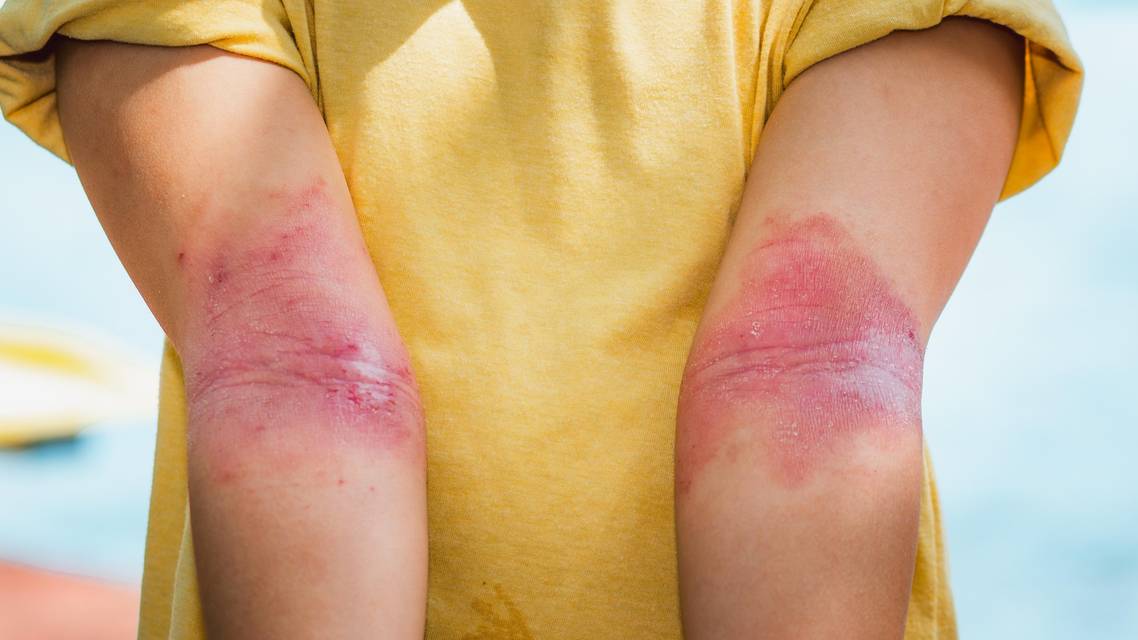
KEY TAKEAWAYS
- The nonsteroidal topical treatment landscape for atopic dermatitis (AD) has expanded substantially, offering calcineurin inhibitors, PDE4 inhibitors, tapinarof, and topical JAK inhibitors across increasingly broad age ranges.
- Treatment selection should be individualized by age, disease severity, anatomic site, safety profile, and patient preference, with certain agents particularly useful for sensitive areas or proactive maintenance.
- Newer therapies offer distinct clinical advantages: roflumilast provides once-daily dosing and favorable tolerability, tapinarof may provide treatment-free intervals after clearance, and topical JAK inhibition can offer rapid improvement in itch and inflammation.
- Safety and practical considerations remain central to therapeutic choice, including application-site reactions, boxed warnings and use restrictions, systemic exposure, cost, insurance coverage, and the availability of long-term safety data.
Treat and Prevent AD at Any Age
Atopic dermatitis (AD) is a chronic inflammatory skin disease that can affect individuals of any age, from infants to adults. Topical corticosteroids (TCS) remain a first-line therapy for acute flares but come with side effects such as atrophy, hypopigmentation, and steroid-induced rosacea with long-term use. Nonsteroidal topicals offer several advantages. They can be applied to sensitive sites with greater safety, carry a lower risk of side effects, and remain useful for controlling residual or breakthrough flares even in patients on systemic therapy. In recent years, the armamentarium of nonsteroidal topicals has expanded, as has the age range of approvals. This review will cover available nonsteroidal topicals for AD and help clinicians choose which one is best for their patient.
Calcineurin Inhibitors
Topical calcineurin inhibitors were the first nonsteroidal topicals approved by the US Food and Drug Administration (FDA) for AD. By suppressing IL-2 signaling and local T cell activation, they suppress the local inflammatory skin response. Tacrolimus 0.03% ointment was approved in 2000 for children ≥2 years, and tacrolimus 0.1% ointment for patients ≥16 years.1 Pimecrolimus 1% cream was approved shortly thereafter for children ≥2 years.1
Efficacy
Tacrolimus 0.1% is roughly equivalent in efficacy to a mid-potency TCS.2,3 In a meta-analysis focusing specifically on pediatric AD, there were no statistically significant differences in efficacy between tacrolimus 0.03% and 0.1%, and response rates with tacrolimus were higher than those for patients with AD treated with hydrocortisone 1% or pimecrolimus 1% cream.4
Safety
Topical calcineurin inhibitors carry a postapproval FDA boxed warning for an increased risk of malignancy, which has since been the subject of substantial study. This warning was implemented based on data from oral calcineurin inhibitors in transplant recipients and rodent studies using high-dose oral or ethanol-vehicle exposure.5 Long-term evidence has been consistently reassuring. The 10-year prospective APPLES study followed more than 7900 children on topical tacrolimus over 44,629 person-years and identified 6 incident cancers with no lymphomas and no nonmelanoma skin cancers, rates consistent with the background pediatric population.6 Subsequent meta-analyses likewise found no increased cancer risk with topical calcineurin inhibitors.5,7
The main practical adverse effect is transient application-site burning or stinging, more pronounced with tacrolimus than pimecrolimus.8 This can be mitigated by a brief course of TCS to reduce inflammation before initiating the calcineurin inhibitor, or by precooling the tube prior to application.
When to Choose
Calcineurin inhibitors are well-suited for sensitive sites such as the face, eyelids, groin, and intertriginous areas where the risk of TCS-induced atrophy, striae, and telangiectasias is highest. Proactive twice-weekly use to previously affected sites can reduce relapse rates.9-11 With more than 2 decades on the market and generic formulations, calcineurin inhibitors may be the most cost-accessible nonsteroidal option and have favorable long-term safety data for disease maintenance and prevention (Table).12,13
PDE4 Inhibitors
Phosphodiesterase-4 (PDE4) inhibitors raise intracellular cyclic AMP levels in immune cells, thus suppressing the release of pro-inflammatory cytokines (such as IL-4, IL-13, and IL-31) that drive AD inflammation.14 Crisaborole 2% ointment was the first medication in this class and is now approved for ages 3 months and up, dosed twice a day. Roflumilast cream is available in two strengths: the 0.15% formulation was approved in 2024 for mild-to-moderate AD in patients ≥6 years, and the 0.05% formulation was approved in 2025 for ≥2 years. Both are dosed once daily, with no BSA restriction and no duration limit. Finally, difamilast 0.3% and 1% cream was FDA approved in early 2026 for ages ≥2 years but has been studied in Japan for infants ≥3 months.15
Efficacy
Crisaborole has modest efficacy data, with only 32.8% reporting AD improvement compared to 25.4% improvement in the vehicle group.16 No head-to-head studies have compared crisaborole to TCS, although a meta-analysis suggested it is less effective than TCS, calcineurin inhibitors, or newer nonsteroidal topicals discussed below.17 Roflumilast is a much more potent and selective PDE4 inhibitor, with 25–300× higher receptor affinity than crisaborole.18,19 In a clinical trial of roflumilast 0.15%, about 32% in the roflumilast group achieved clear or almost-clear skin after 4 weeks, compared to about 15% in placebo.20 Roflumilast 0.05% in children aged 2–5 years was similarly effective.21 In the yearlong extension study, roughly one-third of patients reached completely clear skin and were able to step down therapy to twice a week to prevent flares.22 It remains to be seen how difamilast will compare to other options on the market.
Safety
None of the PDE4 inhibitors come with boxed warnings, body surface area (BSA) limits, or major safety concerns, but side effects may occur. The main limitation of crisaborole is application site burning and stinging, with rates from 4% to 10%.23,24 Crisaborole may be more likely to cause application site burning than calcineurin inhibitors.17 Conversely, roflumilast is relatively well tolerated. Headache, nausea, diarrhea, and application-site pain occurred in less than 3% of patients.20 Difamilast clinical trials suggest no new safety signals.25
When to Choose
Despite the lower efficacy and tolerability, crisaborole remains a preferred option for infants aged 3–23 months, where no other nonsteroidal topical is FDA-approved yet. Roflumilast 0.05%/ 0.15% can be used in any patient aged ≥2 years with mild-to-moderate AD when a once-daily option is preferred, with generally better efficacy and tolerability. Roflumilast is also FDA approved for psoriasis, making it a reasonable option for patients with both conditions. It is especially attractive for face, folds, and other sensitive areas, and can be used as proactive maintenance given the lack of duration restrictions. Difamilast, once commercially available, will provide an additional nonsteroidal option for patients aged ≥2 years.
Aryl Hydrocarbon Receptor Agonists
The first-in-class aryl hydrocarbon receptor (AhR) agonist tapinarof 1% cream was FDA approved in 2024 for mild, moderate, and severe AD in patients ≥2 years old, after having previously been approved for plaque psoriasis. Activation of AhR engages three pathways simultaneously implicated in AD pathophysiology: downregulation of pro-inflammatory Th2 cytokines, upregulation of skin barrier proteins (filaggrin, loricrin), and reduction of oxidative stress.26,27
Efficacy
Meta-analysis data suggest tapinarof may be less efficacious than TCS or calcineurin inhibitors,17 but long-term data demonstrate a potential remittive effect with continued use. In the clinical trials, 45% of tapinarof-treated patients achieved an Investigator Global Assessment (IGA) score of 0 or 1 at week 8, compared with 13.9% in the placebo group.28 After complete clearance on tapinarof, the mean treatment-free interval was 80 consecutive days.29
Safety
Tapinarof has no boxed warning, no contraindications, no duration limit, and no BSA restriction. Folliculitis is the main adverse event, occurring in 9% to 17% of patients. Cases are typically mild and self-limiting.29 Pharmacokinetic studies demonstrate essentially negligible systemic exposure following topical application, which can be a helpful counseling point for families.30
When to Choose
Tapinarof is well suited to patients seeking the possibility of treatment-free intervals or for those who prioritize minimizing systemic absorption. Tapinarof is also FDA approved for psoriasis and is another reasonable therapy for patients with both conditions. It may be less optimal for active lesions on the face, beard, or other hair-bearing regions, where the risk of folliculitis is highest.
Topical JAK Inhibitors
Janus kinase (JAK) inhibitors block the JAK–STAT signaling cascade through which multiple Th2 and pruritus-driving cytokines signal, producing rapid suppression of both inflammation and itch.31 Two topical JAK inhibitors are now FDA approved in dermatology: ruxolitinib for AD, and delgocitinib for chronic hand eczema. Ruxolitinib 1.5% cream is a selective JAK1/JAK2 inhibitor for mild-to-moderate AD in patients ≥2 years old.32,33 It is formally indicated as second-line therapy for AD, approved for short-term or noncontinuous use only.34 Dosing is twice daily, with a BSA cap of ≤20% and weekly tube limits of ≤60 g for adolescents or ≤100 g for adults. Delgocitinib 2% cream is a topical pan-JAK inhibitor approved in 2025 for chronic hand eczema in adults. Chronic hand eczema can occur due to irritants, allergies, and/or atopic/intrinsic triggers, and many patients have multiple etiologies.35 The clinical trials for delgocitinib enrolled patients across this etiologic spectrum, and subgroup analyses demonstrated consistent efficacy across all three subtypes.36 Similar to ruxolitinib, usage is capped at 30 g per 2 weeks, and usage is indicated formally for hands and wrists only.
Efficacy
Compared to other nonsteroidal topicals, these two agents have demonstrated some of the highest efficacy.17,37,38 In ruxolitinib clinical trials, 51.3% of treated patients achieved clear or almost-clear skin at week 8 compared with 15% on vehicle, and meaningful itch relief was frequently reported within 12 hours of the first application—faster than with most other topicals.33 In the pediatric cohort, 57% of children aged 2–11 years achieved clear or almost-clear skin at week 8 versus 11% on vehicle.32 In the DELTA-1 and DELTA-2 trials of delgocitinib, 20% to 29% of treated patients achieved IGA success compared with 7% to 10% on vehicle.36
Safety
Ruxolitinib carries a classwide JAK inhibitor boxed warning for serious infections, mortality, malignancy, major adverse cardiovascular events (MACE), and thrombosis, extrapolated from oral JAK inhibitors.34,39 Counseling requires contextualizing this warning: topical ruxolitinib has minimal systemic absorption (~1.5% bioavailability).40 No MACE, thrombosis, malignancies, or serious infections were observed in the pediatric clinical trials or in 1 year postmarketing follow-up of adults.41,42 The BSA cap (≤20%) and weekly tube allotment are designed specifically to keep systemic exposure low. However, use is formally not recommended in immunocompromised patients or in combination with biologics, systemic JAK inhibitors, or potent immunosuppressants. Delgocitinib avoided the boxed warning at approval, reflecting a more nuanced and modern FDA assessment of the risks associated with topical JAK inhibition.
When to Choose
Topical JAK inhibitors are well suited for patients who prioritize rapid symptomatic relief. Cost and insurance coverage are practical limitations, and the boxed warning on ruxolitinib remains a counseling burden even when clinically reassuring. Ruxolitinib is also FDA approved for nonsegmental vitiligo, making it a logical choice for patients with both conditions. For chronic hand eczema, delgocitinib offers a targeted, nonsteroidal option with demonstrated efficacy across the major etiologic subtypes.
Conclusion
The nonsteroidal topical armamentarium for AD has expanded substantially in recent years, offering clinicians flexibility in matching agent to patient. For infants aged 3–23 months, crisaborole remains the only FDA-approved option. From age 2 onward, choice is increasingly driven by patient-specific factors. Calcineurin inhibitors offer similar efficacy to mid-potency TCS and, as the oldest nonsteroidals on the market, have affordable generic options and long-term safety data. Tapinarof and newer PDE4 inhibitors offer clean safety profiles with no BSA restrictions, and minimal systemic absorption, and they may be good proactive agents to prevent flares. Topical JAK inhibitors deliver the fastest symptom relief and arguably the greatest efficacy. Familiarity with this expanding toolkit allows clinicians to individualize therapy by age, site, severity, and family preference.
Disclosures: Dr. Ungar is an employee of Mount Sinai and has received research funds (grants paid to the institution) from Bristol Myers Squibb, Incyte, Rapt Therapeutics, Pfizer, and Sanofi. He is also a consultant for AbbVie, Arcutis Biotherapeutics, Apogee Therapeutics, Bristol Myers Squibb, Botanix Pharmaceuticals, Castle Biosciences, Ebla Holdco, Fresenius Kabi, Galderma, Johnson & Johnson, Leo Pharma, Lilly, Nektar Therapeutics, Pfizer, Primus Pharmaceuticals, Sanofi, Sun Pharma, UCB, Veradermics, and VRG Therapeutics.
| Drug | Class | FDA-approved Indication | Dosing and Limits | Side effects/AEs | Boxed Warning? | Best Clinical Use |
|---|---|---|---|---|---|---|
| Tacrolimus 0.03% & 0.1% ointment | Topical calcineurin inhibitor (TCI) | • 0.03%: ≥2 years • 0.1%: ≥16 years | • BID • No BSA limit • No duration limit | Application-site burning/stinging | • Yes • (theoretical increased malignancy risk) | • Sensitive sites: face, eyelids, neck, groin, intertriginous areas • Maintenance/proactive therapy • Generic—cost-effective |
| Pimecrolimus 1% cream | Topical calcineurin inhibitor (TCI) | ≥2 years | • BID • No BSA limit • No duration limit | Application-site burning/stinging (less than tacrolimus) | • Yes • (theoretical increased malignancy risk) | • Sensitive sites: face, eyelids, neck, groin, intertriginous areas • Maintenance/proactive therapy • Generic—cost-effective |
| Crisaborole 2% ointment | PDE4 inhibitor | ≥3 months | • BID • No BSA limit • No duration limit | Application-site burning/stinging (may be greater than tacrolimus) | No | Only FDA-approved option for infants 3–23 months old |
| Roflumilast 0.05% and 0.15% cream | PDE4 inhibitor | • 0.05%: 2-5 years • 0.15%: ≥6 years | • Once daily • No BSA limit • No duration limit | • Well tolerated • Rare: headache, UTI, diarrhea, vomiting, stinging, burning (<3%) | No | Sensitive sites, maintenance/ proactive therapy |
| Difamilast 0.03% and 0.1% cream | PDE4 inhibitor | • 0.1% ≥2 yrs • (0.03% for younger pts not yet FDA approved) | • BID • No BSA limit • No duration limit | • Well tolerated • Rare: nasopharyngitis, folliculitis, contact dermatitis | No | Sensitive sites, maintenance/ proactive therapy |
| Tapinarof 1% cream | Aryl hydrocarbon receptor (AhR) agonist | ≥2 years | • Once daily • No BSA limit • No duration limit | • Folliculitis in 9–17% • Rare: headache, contact dermatitis | No | • Intermittent flare management benefiting from remittive effect. • Patients with comorbid psoriasis (also FDA approved) |
| Ruxolitinib 1.5% cream | JAK1/JAK2 inhibitor | ≥2 years (second line in ages 2-11 years) | • BID • ≤20% BSA • ≤60 g/wk (adolescents) • ≤100 g/wk (adults) • Should not be used with other JAK inhibitors, systemic immunosuppressants | • URI most common (~3%) • Application-site reactions uncommon | • Yes • (systemic JAK warning for increased risk of MACE, thromboembolic events, malignancy, serious infection, and death) | • Rapid itch relief—fastest of any nonsteroidal • Mild-to-moderate AD inadequately controlled by other topicals • Patients with comorbid vitiligo (also FDA approved) |
| Delgocitinib 2% cream | Pan-JAK inhibitor | ≥18 years for chronic hand eczema | • BID • ≤30 g/2 weeks • Should not be used with other JAK inhibitors, systemic immunosuppressants | • Well tolerated • Occasional application site reaction (itch, contact dermatitis, application site folliculitis) | No | Only FDA-approved nonsteroidal for chronic hand eczema that has been shown to work on allergic, irritant, and atopic etiologies. |
| Abbreviations: AE, adverse event; AhR, aryl hydrocarbon receptor; BID, twice daily; BSA, body surface area; FDA, Food and Drug Administration; JAK, Janus kinase; MACE, major adverse cardiovascular event; NMA, network meta-analysis; PDE4, phosphodiesterase 4; TCI, topical calcineurin inhibitor; URI, upper respiratory infection | ||||||
Ready to Claim Your Credits?
You have attempts to pass this post-test. Take your time and review carefully before submitting.
Good luck!
Recommended
 Atopic Dermatitis
The Importance of Patient-Reported Outcomes in Atopic Dermatitis
Aaron Cheng, BA, BS; David CotterAaron Cheng, BA, BS; David Cotter- Atopic Dermatitis
Severe Widespread Eczema Mimicking Mycosis Fungoides
BOSTON J. ANDERSEN; Harisankeerth MummareddyBOSTON J. ANDERSEN; Harisankeerth Mummareddy